
Key Takeaways
- Small, dry, isolated holes and dents can often be patched successfully.
- Soft, swollen, moldy, or spreading damage usually requires section replacement.
- Any moisture source must be corrected before patching, priming, or painting.
- Thin compound coats, careful sanding, primer, and texture matching create a less visible finish.
- Damage involving utilities, contaminated water, mold, or structural movement needs extra caution.
Drywall can look simple, but a dent, hole, stain, or crack may point to very different repair needs. Knowing when a basic drywall repair is appropriate and when damaged material should be removed helps prevent a cosmetic fix from failing later.
The right approach depends on whether the wall is dry, firm, stable, and free from hidden moisture problems. Small surface flaws are often manageable, while soft gypsum, recurring cracks, and water exposure call for a more careful inspection.
Why Drywall Damage Needs More Than a Quick Cover-Up
Drywall creates the finished surface of a room while covering framing, insulation, wiring, and plumbing. Paint can hide a faint scuff, but it cannot restore gypsum that has become weak, loose, damp, or detached from its paper facing.
A visible mark may also be smaller than the actual problem. For example, a ceiling stain that enlarges after storms is not just a painting issue. It may indicate an active roof leak, wet insulation, or deteriorating material above the ceiling.
For larger openings, repeated cracks, or difficult finish work, homeowners may choose to consult drywall repair contractors after identifying the likely cause of the damage.
First Step: Identify the Type of Damage
Before choosing patching materials, inspect the area in good light. Look at the damage itself, then check several inches beyond it. A stable patch starts with sound drywall around the opening or crack.
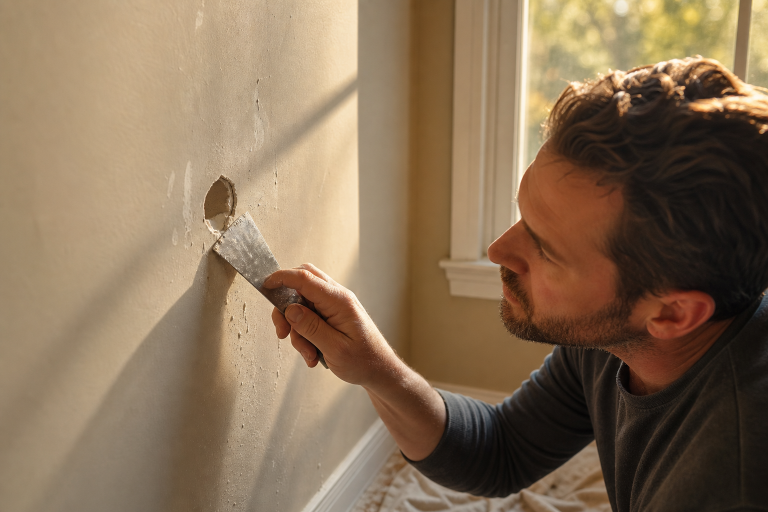
- Note the size, shape, and location of the damaged area.
- Press gently around it to check for softness, movement, or crumbling edges.
- Look for bubbling paint, swelling, loose tape, or separated paper facing.
- Check for dampness, a musty odor, or staining that continues to spread.
- Inspect nearby trim, flooring, ceilings, fixtures, and plumbing for related signs.
When a Small Patch Is Usually Enough
Small nail holes, screw holes, shallow dents, and minor door-handle impacts can usually be filled if the surrounding surface is dry and firm. Short hairline cracks may also be repaired when they do not return, and there is no sign of movement behind the wall.
A small access opening can often be patched with a supported drywall piece or an approved repair patch. Remove loose material first, then apply spackle or joint compound in several thin coats. Thick coats take longer to dry, shrink more noticeably, and are harder to sand flush with the wall.
When the Damaged Section Should Be Replaced
Replacement is often the better option when the drywall no longer has reliable strength. That does not necessarily mean removing an entire wall. Once the source of damage is corrected, a clean, limited section can often be cut out and replaced.
- The drywall feels soft, swollen, weak, or spongy.
- The paper face has pulled away from the gypsum core.
- A crack keeps returning after previous repairs.
- A hole reaches a seam, corner, outlet, or ceiling edge.
- Multiple damaged areas appear across the same wall section.
- Visible mold or contaminated water has affected the material.
Water Damage Changes the Repair Plan
A water stain should never be treated as a patch-and-paint job until the moisture source has been found and stopped. Common causes include roof leaks, supply-line leaks, overflowing fixtures, failed window or shower seals, and condensation around cold surfaces.
After stopping the source, dry the area and check the drywall, insulation, and framing for swelling or deterioration. The EPA advises that moldy surfaces must be cleaned and dried before painting, and porous materials can be difficult to restore when mold growth is extensive.
Patch, Panel Repair, or Full Wall Replacement?
Use the condition of the material to guide the scope
- Small hole in dry, firm drywall: Fill, sand, prime, and paint.
- Medium hole with solid surrounding material: Cut a neat opening and install a supported patch.
- Soft or swollen drywall: Remove affected material and replace the damaged section.
- Visible mold or contaminated water: Follow suitable cleanup and removal procedures before rebuilding.
- Large or recurring cracks: Inspect for framing movement, settlement, or another underlying cause before finishing the surface.
How a Clean Drywall Repair Is Completed
- Protect floors, furniture, and nearby fixtures from dust and debris.
- Remove loose paint, paper, joint compound, and damaged gypsum.
- Cut the opening into a clean shape with stable edges.
- Add backing or fasten a replacement piece to solid support.
- Apply joint tape where needed, then spread thin coats of compound.
- Allow each coat to dry fully before light sanding.
- Match the wall texture, prime the repaired area, and paint.
- Check the repair from different angles under normal room lighting.
Why Texture Matching Often Takes the Most Skill
A wall can be structurally repaired yet still look noticeable if its texture is not matched. Smooth walls, orange peel, knockdown, and heavier hand-applied textures each require different techniques. Test spray or compound texture on cardboard first, because an overly heavy or flat patch can stand out after painting.
Paint can also reveal the repair. Fresh paint applied only over a small patch may create a different sheen or color block, especially on older walls. Extending paint to a natural break, such as a corner or doorway, often produces a more consistent appearance.
Safety Checks and Common Mistakes
Turn off power before working near outlets, switches, or fixtures, and do not cut blindly where wiring or plumbing may be present. Wear eye protection and a suitable dust mask when sanding or cutting. Flood-damaged homes require additional precautions because wet outlets and standing water can create electrical shock hazards.
- Do not paint over a stain before stopping the leak.
- Do not use one thick layer of compound to fill a deep area.
- Do not skip primer on fresh joint compound.
- Do not sand aggressively enough to tear the surrounding drywall paper.
- Do not conceal mold with paint, caulk, or wallpaper.
- Do not install an unsupported patch in a larger opening.
When to Call for Professional Help
Professional assessment makes sense when damage is widespread, recurring, near electrical components, or connected to a leak that may have affected insulation or framing. Seek help if the wall or ceiling feels unstable, a musty smell remains, sewage or floodwater was involved, or prior patches continue cracking or showing through paint.
Conclusion: Choose the Repair That Solves the Real Problem
Drywall repair is straightforward when damage is small, dry, and stable. It becomes more involved when moisture, mold, repeated movement, or hidden conditions are present. A careful inspection helps determine whether a light patch, a replacement section, or a broader repair plan will restore the wall and reduce the chance of repeat damage.