

Understanding Assault and Battery in Georgia
When individuals encounter the terms “assault” and “battery” in the context of Georgia law, confusion often arises about what each crime entails. Despite being commonly grouped, assault and battery are distinct offenses with specific definitions and legal consequences. Whether you are a resident, visitor, or legal practitioner, understanding these differences is vital when facing or navigating related legal situations. For anyone needing experienced legal representation in this area, brianhobbslaw.com provides resources and professional assistance tailored to Georgia law.
Assault and battery cases can significantly impact your future, affecting your freedom, reputation, and finances. Thus, awareness of how Georgia separates and prosecutes these charges is essential for both those accused and the alleged victims. Early intervention by knowledgeable legal counsel often makes a critical difference in case outcomes, as local statutes create distinctions from those in many other states.
Defining Assault in Georgia
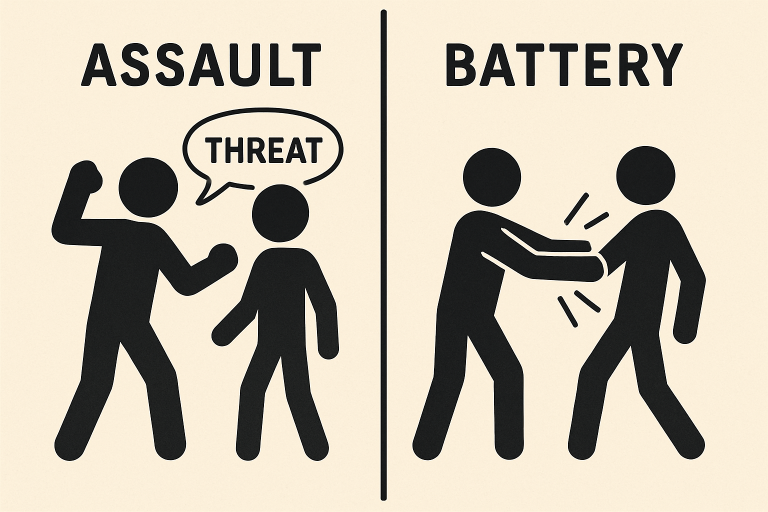
In Georgia, assault is defined as either an attempt to inflict a violent injury on another person or an act that causes someone to fear immediately receiving such an injury reasonably. Crucially, a physical altercation is not necessary; even the credible threat of violence—like raising a fist with clear intent to strike—qualifies as assault if it makes the victim fear impending harm. The law’s focus on perception and intent sets Georgia’s statutes apart from those in jurisdictions that require physical contact for assault charges.
Defining Battery in Georgia
Unlike assault, battery always involves unwanted or harmful physical contact. Georgia officially defines battery as the intentional touching of another in an insulting, provoking, or injurious manner. Examples include punching, pushing, or even aggressive shoving—acts that cause either harm or offense. The crux of battery charges lies in the act of contact, whereas assault hinges on the credible threat or apprehension of imminent harm.
Degrees of Assault and Battery
Georgia law stratifies assault and battery by seriousness and resulting harm, which shapes the sentencing guidelines. The distinctions are important for both legal strategies and understanding potential consequences:
- Simple Assault: This misdemeanor occurs when someone attempts to inflict injury or places another in fear of harm. Convictions can result in up to one year in jail and fines up to $1,000.
- Aggravated Assault: A felony that involves intent to murder, rape, or rob, or the use of a deadly weapon. Penalties range from one to twenty years in prison, depending on the circumstances and the victim’s status.
- Simple Battery: A misdemeanor offense for intentional physical contact meant to insult, provoke, or harm. Penalties mirror those of simple assault.
- Aggravated Battery: A felony for maliciously causing serious injury—such as disfigurement or loss of use of a body part. These convictions carry a sentence of one to twenty years in prison, with enhancements for vulnerable victims or particularly egregious cases.
For a deeper dive into these distinctions and historical context, the U.S. The Department of Justice provides helpful resources on federal perspectives on violent crime.
Legal Implications and Penalties
Both assault and battery charges have serious legal ramifications in Georgia. A conviction—especially for aggravated categories—may result not only in incarceration and costly fines, but also a permanent criminal record that can threaten employment, housing, and educational opportunities. Misdemeanors can carry a maximum of one year in jail, while felonies can lead to much harsher prison sentences. Additional penalties often include probation, mandatory counseling, and restitution to the victim. Charges and sentencing can be elevated if aggravating factors exist, such as if the victim is a police officer, elderly, or a minor, or if a weapon is involved in the alleged offense.
Recent Case Highlighting Assault and Battery
A recent high-profile incident in Georgia involved a former sheriff’s deputy who was sentenced to 16 months in federal prison for using excessive force against a detainee. This case highlights how the severity of charges and sentences can increase when a person in a position of authority abuses their power, as federal and state prosecutors often pursue aggravated charges resulting in imprisonment and long-term repercussions. Such examples underscore the gravity of these offenses and the lasting impact on both victims and offenders.
Seeking Legal Assistance
If you or a loved one is facing assault or battery charges in Georgia, consulting a qualified criminal defense attorney immediately is crucial. Legal professionals can clarify the nature of the charges, outline possible defenses, and challenge evidence or testimonies. They may also negotiate plea deals or advocate for reduced sentences, especially for first-time offenders or those facing potentially life-altering felony charges. Skilled legal guidance can make the difference between a favorable verdict and severe consequences.
Conclusion
Grasping the vital differences between assault and battery under Georgia law is essential for informed legal decision-making, whether you’re involved in a dispute, defending your rights, or assisting someone else. Each offense carries unique definitions, degrees, and potential penalties that may shape personal, legal, and professional futures. Staying informed and seeking expert legal help can protect your interests and ensure your case is handled appropriately from the outset.