

Key Takeaways:
- Understand the different types of water heaters available.
- Consider factors such as household size, energy efficiency, and installation requirements.
- Be aware of potential tax credits and incentives for energy-efficient models.
Introduction
Finding the ideal water heater for your home is a decision that impacts comfort, energy bills, and even your carbon footprint. From daily showers to laundry and dishwashing, hot water is essential, making it crucial to choose a solution that matches your household’s unique needs and usage. Exploring professional Tankless water heater installation in Ruston services can ensure both efficiency and reliability for your home.
It’s not just about picking any model off the shelf—each type of water heater offers distinct advantages and considerations. With the proper guidance, homeowners can balance up-front costs, ongoing savings, and overall performance for years of hassle-free hot water.
While evaluating your options, it’s wise to consider not only the latest technology but also your home’s capacity for upgrades and installation requirements. Local rebates, federal tax incentives, and professional recommendations can meaningfully offset costs and improve efficiency.
By the end of this guide, you’ll have a clearer understanding of both the functional and financial factors that go into choosing the perfect water heater. Making an informed decision will help you optimize energy use and ensure consistent comfort.
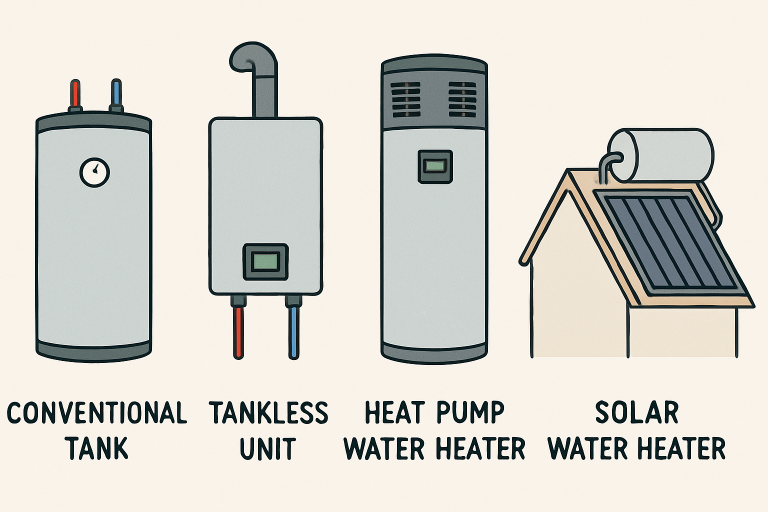
Types of Water Heaters
Today’s market offers an array of water heater options, each suited to varying household needs and installation conditions:
- Conventional Storage Water Heaters: These traditional models keep a reserve of pre-heated water ready for use. They’re familiar and reliable, but may run out of hot water during peak demand, which could inconvenience larger families or households with frequent simultaneous use.
- Tankless (On-Demand) Water Heaters: Operating without a storage tank, these systems heat water only when needed. The design provides uninterrupted hot water and reduces standby energy losses, making it ideal for efficiency-minded households or homes with lower simultaneous hot water demands.
- Heat Pump Water Heaters: By transferring heat from the surrounding air or ground, these units deliver remarkable efficiency. Ideal for mild- to warm-climate installations, they generally outperform standard electric heaters and may qualify for financial incentives thanks to their eco-friendly design.
- Solar Water Heaters: Leveraging rooftop solar panels, these heaters convert sunlight into hot water—offering substantial energy savings in sun-rich regions. While initial costs may be higher, lower utility bills and potential tax credits can make this a long-term win for green-conscious homeowners.
For a deeper dive into energy-efficient appliances, resources like the U.S. Department of Energy’s guide to water heating offer reliable, up-to-date information. These choices illustrate how modern innovations give homeowners more flexibility than ever to customize their water-heating setup to suit their comfort, budget, and sustainability preferences. With a clear understanding of each type’s benefits, families can confidently select a system that delivers reliable performance and long-lasting value.
Factors to Consider
Several criteria play a role in determining which water heater will suit your home best:
- Household Size and Hot Water Usage: The number of people in your home—and your household routines—determine your hot water needs. Larger homes or families with high simultaneous usage (multiple showers, laundry, and dishes at once) may favor larger tanks or high-flow tankless units.
- Energy Efficiency: Look at Uniform Energy Factor (UEF) ratings: a higher number signals greater efficiency. For example, heat pump water heaters (with UEF ratings of 3-4) significantly outperform both gas and electric conventional units. Consult Consumer Reports’ water heater buying guide for comparative ratings and recommendations.
- Installation Requirements: Space constraints, venting options, and your home’s existing electrical or gas setup all influence what kind of water heater can be installed safely and effectively. It’s essential to ensure that your selected system fits your property’s infrastructure.
Energy Efficiency and Cost Savings
Energy-efficient water heaters not only help the environment but also save you money. For instance, heat pump units can be three to four times more efficient than conventional electric models, leading to hundreds of dollars in savings over the unit’s lifespan. Additionally, select models may be eligible for federal tax credits or local rebates, which can significantly reduce the upfront investment in high-efficiency upgrades.
Upgrading to an ENERGY STAR®-certified water heater further ensures you benefit from proven performance criteria while qualifying for available incentives. Check with your local utility or state energy office to find out about current rebate and incentive programs before purchasing.
Installation Considerations
Even the most advanced water heater will underperform if not installed correctly. Key factors to consider include:
- Location: Adequate space must be allocated, especially for units such as heat pump water heaters that require air circulation. Accessibility for maintenance should also be considered.
- Electrical Requirements: Some units, especially tankless and heat pump models, may need upgrades to your home’s electrical panel or dedicated circuits.
- Professional Installation: Engaging a licensed plumber or HVAC technician helps ensure your system is installed securely, meets local codes, and operates at peak efficiency.
Maintenance and Longevity
Regular maintenance goes a long way in prolonging the life and maintaining the efficiency of your water heater. Recommended actions include:
- Flushing the tank annually to remove sediment, which can reduce efficiency and cause premature failure.
- Checking and replacing the anode rod as needed to prevent internal corrosion in tank-based models.
- Inspecting for any leaks, rust, or wear, and addressing minor issues before they escalate into costly repairs.
Tankless water heaters, while generally lower in maintenance needs, still benefit from periodic descaling—especially in hard-water regions—to ensure optimal performance.
Conclusion
Choosing the right water heater involves a balanced evaluation of your family’s needs, including household size, daily hot water usage, and the types of appliances you rely on. It also requires looking at long-term efficiency, installation requirements, and overall operating costs to ensure you select a system that delivers comfort, reliability, and value over time.