

Group bus travel is truly an enriching experience, whether your purpose is recreation, business, or attending special events like weddings, sports games, or corporate retreats. Traveling with a group fosters camaraderie and enables people to share the journey, creating lasting memories together. However, a successful trip is about much more than just hopping on a bus—it calls for careful preparation to ensure everyone’s comfort, safety, and overall satisfaction. There are many moving parts to consider, from booking to itinerary management. A well-planned group bus trip can offer unparalleled convenience and cost savings while minimizing travel stress. To help you orchestrate a seamless adventure that everyone will cherish, here’s a comprehensive guide packed with expert tips and thorough planning advice. If you’re journeying in or around Rhode Island, Metropolitan Shuttle in Providence offers tailored transportation solutions designed to accommodate a variety of groups and needs—from small gatherings to large conventions.
From selecting the perfect transportation partner to managing the finer details of your group’s itinerary, the real art of group travel lies in attention to every detail. Thoughtful planning can help you avoid stress, wasted time, and common travel pitfalls. When you prioritize organization and wise decision-making, you maximize your group’s comfort and collective enjoyment, ensuring that the journey is just as enjoyable as the destination. With the following tips, you’ll feel well-equipped to organize successful group excursions that create lasting memories.
Choose a Reliable Bus Service
The foundation of a safe and pleasant group trip is selecting a reputable and professional bus company. Begin your search by looking into the company’s track record—read customer reviews that highlight past group experiences regarding professionalism, punctuality, and overall satisfaction. Equally important is ensuring that the company follows strict safety protocols. Request documentation of their vehicle maintenance schedule to ensure all buses are serviced regularly and meet all regulatory standards. Additionally, verify the company’s insurance and ensure it holds the necessary licenses for passenger transport. Experienced and courteous drivers make a significant difference in group comfort and safety, so be sure to ask about their qualifications and training programs. A reliable provider places a premium on both passenger safety and overall travel comfort. Providers who are willing to share details, such as safety statistics, contingency plans, and trip planning tips, are usually more transparent and trustworthy. The Federal Motor Carrier Safety Administration is a helpful authority—use their bus safety checklist to compare your options and make an informed decision. Doing this research upfront means your group trip can begin and end with peace of mind.
Plan with Purpose
Every successful trip has a clear set of objectives. Determine whether your trip is focused on sightseeing, attending events, or visiting multiple destinations. Each purpose comes with unique timing and logistics requirements—for example, a sports team charter might need more flexibility for warm-up stops or equipment drop-offs. In contrast, a corporate group may require a direct trip with scheduled comfort breaks. Coordination with your chosen bus company is key to crafting a detailed routing plan that avoids traffic congestion, roadwork, or detours. Experienced transportation partners can often recommend more efficient routes or alternative stops to enhance your schedule. Clearly communicate your group’s priorities—departure and arrival windows, preferred stops, and must-see sites—well in advance. Early and open discussions help the bus service tailor your experience while ensuring all arrangements match your expectations. A purpose-driven itinerary is not only about punctuality but also about maximizing enjoyment and minimizing wasted time for everyone involved.
Consider Accessibility
Accessibility planning demonstrates your commitment to ensuring every group member feels included and comfortable. If your group includes people who use wheelchairs, walkers, or require other accommodations, address these needs in advance. It’s smart to confirm that your chosen vehicle has features such as wheelchair lifts or low floors, accessible restrooms, and designated seating areas. Communicate specific accessibility requirements to your provider early, rather than assuming standard options will suffice. Doing so not only prevents last-minute hiccups but also ensures that everyone can participate fully, regardless of their mobility level. Inclusive travel planning means that all group members—regardless of age or ability—can focus on enjoying the journey rather than worrying about logistics.
Coordinate Lodging and Meals
Aligning your travel schedule with accommodations and meal stops creates a smoother experience for your group. It’s wise to synchronize check-in and check-out times with your bus schedule and plan meal breaks along your route. Consider working with hotels that are “bus-friendly,” offering ample parking and fast check-in for groups. Partnering with your bus charter service can further streamline logistics; many professionals maintain relationships with hotels and restaurants that are specifically equipped to handle group travelers. This can help your group avoid delays, secure group discounts, and ensure everyone has ample time to rest and refuel. Prearranging group meals eliminates the guesswork of dining options, allowing you to stay on schedule and minimize the risk of dietary mishaps. Seamless transitions from the bus to your lodging or meal stops mean your travelers spend more time enjoying sites and less time worrying about logistics.
Pack Smart
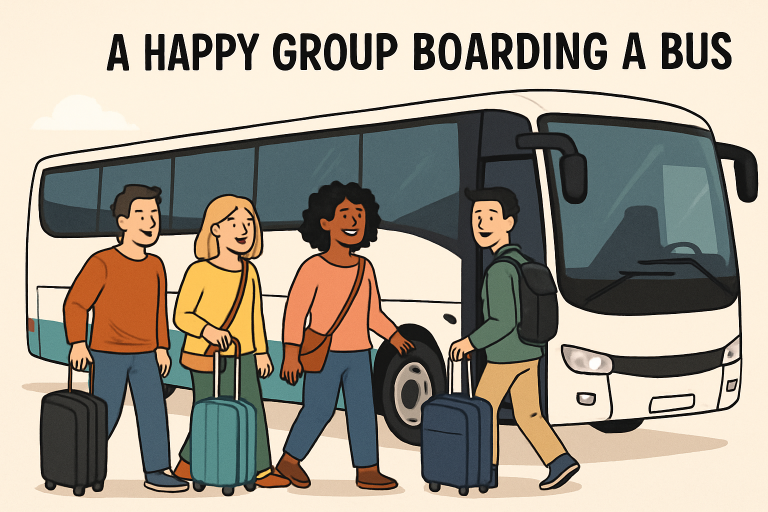
Efficient packing is essential on group bus trips, as onboard space is almost always at a premium. Encourage all travelers to pack as lightly as possible, using smaller, clearly labeled bags. A luggage tag with your name and contact information is a good idea in case your items are misplaced. If your group needs to bring bulkier gear—such as musical instruments, sports equipment, or presentation materials—confirm with your bus company that adequate, secure storage is available. Strategic packing not only prevents onboard clutter and keeps aisles clear, but also reduces the risks of trip hazards during travel. Overpacking can slow down boarding and exits, delay journey timelines, and reduce available legroom or seating comfort. Encourage minimalism and organization by specifying packing guidelines in your group’s pre-trip communication to reinforce these expectations.
Plan for Onboard Comfort
Comfort makes all the difference in travel satisfaction, especially on long journeys. Remind your travelers to bring personal comfort items such as compact travel pillows, noise-canceling headphones, cozy blankets, and individual water bottles. Snacks are a must—healthy choices like trail mix or granola bars are ideal for avoiding blood sugar crashes. Many buses now come equipped with outlets or Wi-Fi, but passengers should also prepare for offline entertainment, such as books or downloaded podcasts. Opt for layered clothing to adjust to bus climate-control settings. These personal touches encourage travelers to unwind and feel at home.
Build in Buffer Time
The most enjoyable trips are those that allow for some flexibility in the schedule. Strict, minute-by-minute itineraries can lead to unnecessary stress, especially if travel delays or unexpected stops arise. Add buffer time to accommodate traffic fluctuations, extended meal breaks, and unplanned rest stops. This breathing room helps groups stay adaptable and in good spirits, even if plans change. Please note that the itinerary allows for flexibility, enabling travelers to relax and enjoy each experience at a comfortable pace. Simple changes—such as padding your schedule by 10–20 minutes per stop—can help keep your trip on track without sacrificing enjoyment or relaxation time.
Communicate with Your Group
Excellent communication is the linchpin of a successful group journey. Provide a written itinerary that includes pick-up and drop-off times, packing guidelines, emergency contacts, and any special plans. Consider using group apps or text alerts to send reminders and updates in real-time. Be sure to clarify behavioral expectations, review bus travel etiquette, and encourage respect for shared schedules and space. Keeping everyone informed not only builds confidence but also fosters a unified, positive atmosphere—making your group travel experience enjoyable from start to finish.
By following these expert strategies, you’ll transform group bus travel from a logistical headache into a rewarding, team-building adventure. Thoughtful planning makes all the difference, paving the way for safety, comfort, and truly lasting memories that your group will cherish for years to come.