

Key Takeaways
- A polished listing can hide daily concerns that are only visible at street level.
- Traffic, noise, parking, walkability, and routine travel time deserve as much attention as interior finishes.
- Wildfire exposure and insurance availability should be reviewed early, particularly in areas near hillsides, canyons, and brush.
- School boundaries, zoning, city jurisdiction, and nearby development can affect long-term ownership experience.
- The right neighborhood is the one that supports your actual routine, budget, and future plans.
In Los Angeles, a home is never just the building behind the front gate. The surrounding streets, traffic patterns, hills, parking rules, nearby businesses, and insurance considerations can shape everyday life as much as the floor plan. Before becoming attached to staging photos or a remodeled kitchen, buyers should learn how the neighborhood works on an ordinary weekday.
For a neighborhood-specific perspective, Beverly Hills real estate expert Peter Mac provides property search tools and local guidance for buyers and sellers across Beverly Hills, Hancock Park, Sherman Oaks, Studio City, West Hollywood, Brentwood, and nearby Los Angeles communities. Peter Mac’s experience with luxury and investment properties, along with an international client network, makes his local market insight especially useful when buyers are comparing the practical differences between nearby high-demand areas.
Why Neighborhood Research Matters
Two Los Angeles homes at similar prices can produce entirely different lifestyles. One may sit on a quiet hillside street with privacy and views, but require longer drives for groceries, school, and dining. Another may be close to cafés, parks, and services, yet experience more traffic, visitors, and evening activity. Neither choice is automatically better. The important question is whether the trade-offs match how you live.
A buyer who expects to work from home may value quiet streets and dependable parking. A frequent traveler may prioritize access to major routes or the airport. A household with young children may care more about sidewalks, school logistics, and usable parks. When a home supports a buyer’s routine, it is often easier to enjoy and easier to explain to future buyers.
Start With Daily Life, Not Listing Photos
Picture a typical Tuesday, not a relaxed Sunday open house. Map the trip from the actual address to work, school, medical appointments, grocery stores, gyms, and places you visit regularly. A drive that feels reasonable at 11 a.m. can look very different during morning drop-off or late-afternoon traffic.
Test the routines that matter most
- Drive or navigate the most important routes during realistic travel times.
- Check whether daily errands can be done on foot, or whether every task requires a car.
- Notice sidewalks, shade, street lighting, stairs, hills, and crossing conditions.
- Consider whether nearby restaurants and nightlife are a benefit, a concern, or both.
- Match the area to your household, whether you are a family, a remote worker, an investor, a downsizer, or a frequent traveler.
Compare Micro-Areas Within the Same City
A neighborhood name can conceal major block-by-block differences. In Beverly Hills, Hancock Park, Sherman Oaks, Studio City, Brentwood, and West Hollywood, a few blocks can change the property type, street width, traffic level, views, walkability, and perceived privacy. Main roads may offer convenient access but are more sound. Residential pockets may feel calmer, but add time to routine trips.
Pay attention to natural and man-made boundaries, including freeways, major boulevards, commercial corridors, canyons, and steep grades. Compare flat streets with hillside streets, older homes with new construction, and single-family homes with nearby condominium or mixed-use development. The goal is not to rank communities. It is to identify the micro-area that best aligns with your priorities.
Check Traffic, Noise, and Street Activity
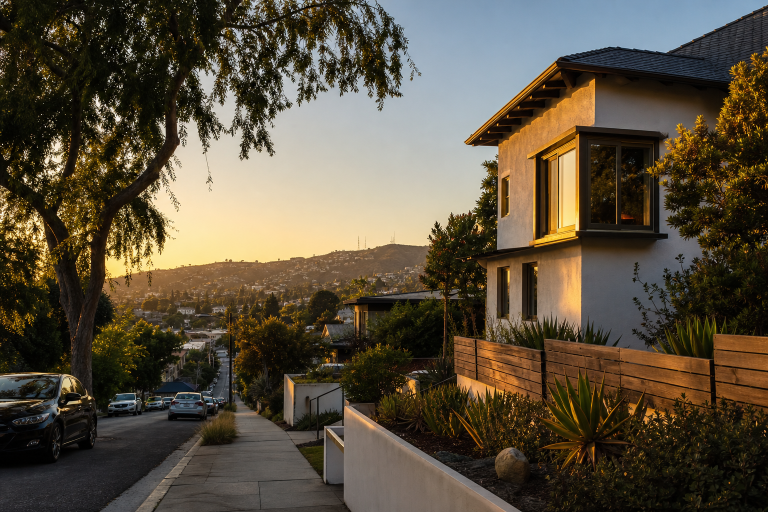
Listing photos rarely reveal how a street sounds at 7:30 a.m., 4:30 p.m., or after dark. Schedule more than one visit and spend time outside the property. Keep windows open during a showing when possible. Listen for vehicle traffic, aircraft, delivery trucks, construction, school activity, dogs, nightlife, and nearby events.
- Stand at the curb and near the backyard for several uninterrupted minutes.
- Look for signs that the street becomes a cut-through route during rush hour.
- Check guest parking, garage access, curb cuts, street-cleaning rules, and permit requirements.
- Return after sunset to evaluate lighting, pedestrian activity, and the overall feel of the block.
- Ask whether nearby schools, venues, or businesses create predictable peak traffic periods.
Review Fire Risk and Insurance Early
Insurance should be part of the initial property review, not a last-minute closing task. This is especially true for homes near foothills, canyons, hillsides, or dense vegetation. Request insurance estimates early, and ask what coverage is available, what deductibles apply, and whether the policy has exclusions that affect your budget.
Review brush conditions, road width, access routes, slope, roofing, vents, gutters, and defensible-space maintenance. The Los Angeles County wildfire preparation guidance is a useful starting point for understanding home hardening, evacuation planning, and property preparation. Buyers should still discuss current policy terms and coverage options with a licensed insurance professional.
Study the Property’s Wider Context
A strong home search looks beyond the lot line. Check for nearby construction, major roadwork, vacant parcels, and redevelopment potential that could affect privacy, views, traffic, or access. Review retaining walls, drainage routes, mature trees, steep slopes, shared driveways, easements, HOA restrictions, and historic-preservation considerations where relevant.
Also, verify the practical details behind the listing. Postal addresses, school references, and neighborhood labels do not always match the governing jurisdiction or service boundaries.
Build a Neighborhood Scorecard
A simple scorecard can make comparisons less emotional when several homes are appealing. Give each category a score from one to five, then write a short note explaining the score.
- Daily convenience: Are groceries, coffee, parks, and essential services easy to reach?
- Commute and access: Does the address work during normal weekday conditions?
- Noise and privacy: Does the property feel comfortable at different times of day?
- Parking and mobility: Can residents and guests park without recurring frustration?
- Insurance and maintenance: Can suitable coverage and upkeep fit the ownership budget?
- Future fit: Will the neighborhood still work if work, family, or lifestyle needs change?
Ask Better Questions During the Search
Vague questions such as “Is this a good area?” rarely produce useful answers. Ask questions tied to your life: Which streets get busiest during school pickup? Which blocks are most walkable? Where do buyers underestimate maintenance or insurance costs? Which nearby areas offer a similar lifestyle at a different price point? Specific questions lead to specific research.
Use a Final Pre-Offer Checklist
- Visit the neighborhood at least three times, including after dark.
- Request an insurance estimate before making an offer.
- Review parking, traffic, noise, and nearby construction.
- Confirm zoning, school boundaries, and city jurisdiction.
- Compare at least three nearby properties in person when possible.
- Write down the neighborhood’s strengths, drawbacks, and unanswered questions.
Conclusion
Choosing the right Los Angeles neighborhood requires looking beyond a home’s appearance. By evaluating daily routines, traffic, insurance, parking, future development, and long-term costs, buyers can make more informed decisions. Careful neighborhood research helps ensure the property supports both current needs and future plans long after the purchase is complete.