

Key Takeaways:
- Innovative hand dryers enhance hygiene by reducing the risk of cross-contamination.
- They contribute to environmental sustainability by minimizing paper waste.
- Advanced features, such as HEPA filters and IoT integration, enhance user experience and operational efficiency.
The Importance of Hygiene in Public Washrooms
Maintaining rigorous hygiene standards in public washrooms is essential—not only for public health but also for fostering user confidence in shared spaces. With the continual movement of people in these areas, every touchpoint can become a conduit for bacteria and viruses. While paper towels were once the standard, facilities are now recognizing the potential of advanced drying technologies, such as U-flow hand dryers, in promoting a cleaner environment.
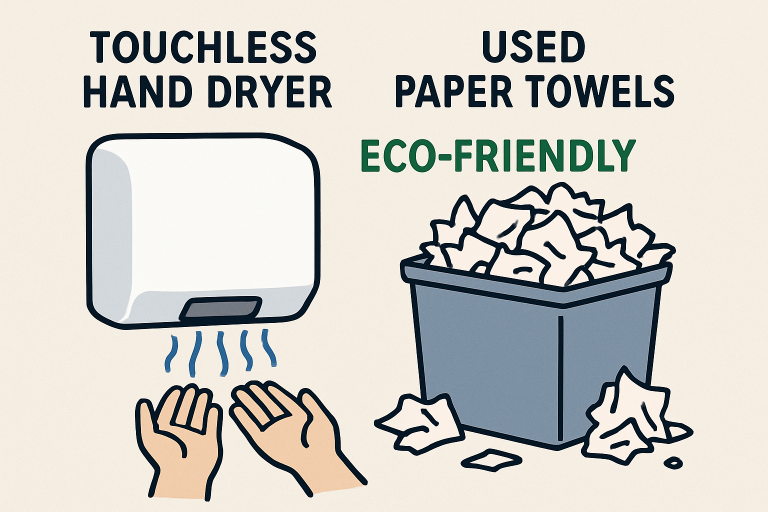
Traditional paper towels, although effective in limiting hand contact with shared surfaces, often fill bins quickly and require frequent replenishment. Overflowing waste exacerbates unsanitary conditions, increasing the risk of pathogen spread and highlighting the need for a more sustainable and hygienic solution in public spaces.
Environmental Impact of Traditional Hand Drying Methods
The environmental drawbacks of paper towels are considerable. The world consumes billions of paper towels annually, leading to high levels of deforestation, increased greenhouse gas emissions, and substantial landfill waste. Production requires not just trees, but tremendous energy, water, and chemical use—leaving an outsized ecological mark for such a disposable product.
Switching to innovative, energy-efficient hand dryers reduces reliance on consumables and curbs ongoing operational costs. These devices can cut landfill contributions, conserve energy, and support eco-friendly facility management practices. Today’s hand dryers are designed to use less electricity while still drying hands rapidly, further reducing their environmental impact compared to manufacturing and transporting paper towels.
For facilities serious about evolving their hygiene practices, integrating innovative drying technology positions them at the forefront of both health and sustainability initiatives. Recent studies have shown that businesses making the switch report a substantial reduction in their carbon footprint, while also improving user satisfaction.
Advancements in Smart Hand Dryer Technology
Modern innovative hand dryers feature significant technical advancements designed to enhance hygiene and user convenience. Innovative models incorporate HEPA filtration, capable of removing up to 99% of airborne bacteria and viruses, ensuring that the air used for drying is nearly sterile. Touchless technology further eliminates the need for users to make physical contact, dramatically reducing the primary sources of cross-contamination in restrooms.
Some innovative dryers are also designed for rapid drying—often in 10-15 seconds—speeding up the drying process and improving restroom traffic flow. Additionally, antimicrobial surfaces on dryer casings prevent bacterial growth on high-touch exterior parts, providing a layered defense for users.
Integration of IoT for Enhanced Facility Management
The rise of the Internet of Things (IoT) is revolutionizing washroom management through the integration of smart hand dryer connectivity. IoT-enabled devices track user activity, energy usage, and even machine performance, sending real-time maintenance alerts to prevent breakdowns before they occur. Facility managers can access analytics dashboards to pinpoint peak usage times, tailor maintenance schedules, and forecast replacement needs, leading to more responsive and cost-efficient operations.
An intelligent, data-driven approach enables organizations to optimize resource allocation and support their sustainability commitments by monitoring and reducing energy consumption.
Case Studies: Successful Implementation of Smart Hand Dryers
One notable example is The Log Cabin, an event venue that accommodates thousands of guests each year. By installing energy-smart hand dryers, this facility enhanced restroom cleanliness, eliminated overflowing bins, and markedly reduced waste. Customers appreciated the cleaner environment, and operations became smoother and more sustainable—a testament to the practical and reputation-boosting benefits of adopting an eco-friendly approach in public washrooms.
Other venues, from schools to airports, have reported similar successes. Reduced replenishment costs, lower maintenance hours, and increased guest satisfaction highlight how this technology drives positive change for both the planet and people.
Addressing Common Concerns About Hand Dryers
Despite the benefits, skepticism around the hygiene of hand dryers lingers, with concerns that some models may disperse bacteria. However, most current-generation devices utilize HEPA filtration and antimicrobial coatings to counteract these drawbacks. According to health experts, innovative dryers equipped with these technologies significantly reduce the risk of airborne contamination and can be just as hygienic—if not safer—than paper towels.
Education and transparency about these scientific advances are crucial for reassuring users and encouraging widespread adoption. For facilities unsure about making the switch, reviewing up-to-date data and seeking peer recommendations can help alleviate lingering concerns.
Steps to Transition to Smart Hand Dryers
Making the transition to innovative hand dryers is a streamlined process when guided by sound planning and best practices:
- Assess Current Restroom Facilities: Begin by evaluating current hand-drying strategies, maintenance challenges, and user feedback to identify areas for urgent improvement.
- Research available technologies that prioritize devices that balance speed, hygiene, and energy efficiency, including advanced features such as IoT integration and HEPA filtration.
- Calculate Cost and Environmental Impact: Weigh upfront investments against long-term savings in supply, labor, and waste management; measure potential reductions in environmental footprint.
- Plan Installation and Maintenance: Create a phased roll-out and servicing plan that minimizes disruption to daily operations.
- Educate Staff and Users: Clearly communicate the features and benefits of innovative hand dryers to both staff and patrons, ensuring user buy-in and seamless adoption.
Conclusion
Investing in innovative hand dryers represents both a forward-thinking business decision and a commitment to public well-being. Through embracing innovation—such as advanced filtration, touchless operations, and smart connectivity—facilities can create safer, greener washrooms. This move not only streamlines maintenance and cuts operational costs but sets a bold example of environmental stewardship and hygiene excellence for all who pass through their doors.