

Key Takeaways
- Insurance needs shift significantly throughout different phases of life.
- Routine policy evaluations help maintain suitable, tailored protection.
- Guidance from seasoned insurance professionals can uncover gaps and savings opportunities.
As life progresses, your needs and responsibilities shift, making it essential to reassess the type and amount of insurance you carry. Each milestone—whether graduating from college, raising a family, or stepping into retirement—brings unique risks and financial priorities. Selecting and updating the right policies is foundational for both peace of mind and financial stability. For those looking to explore their options, comparing insurance rates Torrance can be a practical way to navigate these choices.
Insurance isn’t a one-size-fits-all solution; your needs will evolve as your career, relationships, and overall goals change. Proactive planning and regular reviews protect your assets and loved ones from potential setbacks, ensuring you’re neither underinsured nor overpaying for unnecessary coverage.
At every chapter, adjusting your insurance coverage is a strategic step that not only secures your finances but also offers reassurance amid the unexpected. Life’s transitions—from welcoming new family members to shifting careers—stay manageable when your coverage reflects current realities. Both personal experience and expert advice highlight the critical role timely insurance planning plays in navigating life’s uncertainties.
Regular check-ins—at least annually or after significant life events—are recommended by leading financial resources, such as Forbes Advisor, to help you avoid costly coverage gaps and ensure adequate protection.
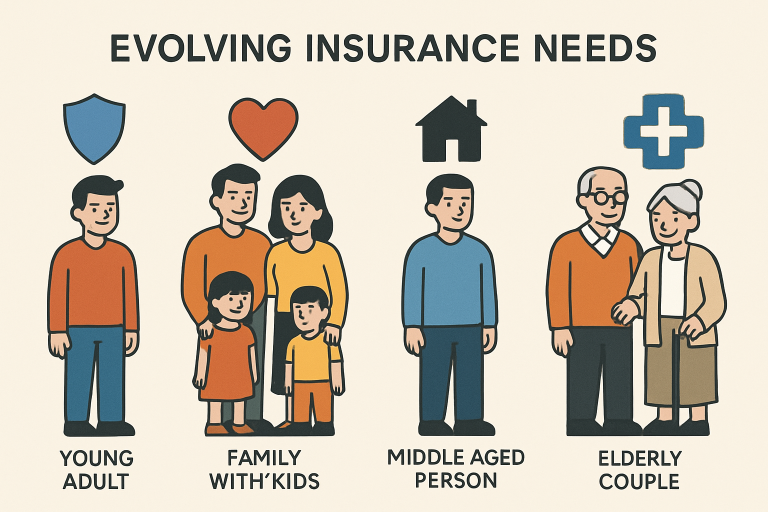
Young Adulthood
For individuals in their 20s and early 30s, insurance is often an afterthought. However, protecting your income and health as you launch your independent life is vital. Health insurance tops the list, safeguarding you from ruinous medical bills that can arise from accidents or serious illnesses. It’s also wise to consider disability insurance—even if you’re young and healthy, a sudden inability to work can upend financial plans.
Building Financial Foundations
Early in your career, life insurance may not appear urgent, but affordable term policies purchased when you’re healthy can lock in low rates for years, as noted by NerdWallet. Combining health, disability, and introductory life insurance policies creates a stable base for future financial growth.
Starting a Family
Marriage, parenthood, and homeownership all require a rethink of your insurance strategy. Life insurance becomes non-negotiable, serving as a financial safety net for your spouse and children in the event of the unexpected. Term life insurance, due to its simplicity and lower premiums, is typically favored at this stage.
Protecting Your Home and Loved Ones
If you own or rent your home, property insurance shields you from losses caused by events such as fire, theft, or natural disasters. As your family grows, update your beneficiaries, increase your coverage limits, and assess whether your policies reflect your new priorities and obligations.
Midlife
Entering your 40s and 50s often brings heightened earning power and increased obligations, such as funding college for children. Your insurance portfolio should expand correspondingly. Boosting life insurance coverage can help support dependents and future tuition needs, while long-term disability insurance and long-term care insurance become more relevant.
Preparing for Health Changes
The likelihood of chronic health conditions increases with age, underscoring the value of robust disability and long-term care policies. By addressing these coverage areas, you can help ensure that future health developments do not jeopardize either your lifestyle or your family’s stability.
Pre-Retirement
As retirement nears—typically in your late 50s to early 60s—focus shifts toward preserving assets and planning for extended healthcare needs. If retirement comes before Medicare eligibility, securing comprehensive health insurance is essential to avoid costly coverage lapses. Long-term care insurance is particularly important at this stage, helping protect your estate from the high costs of nursing care or in-home assistance.
Transitioning to New Coverage
Evaluate whether existing policies are still necessary—downsize life insurance if beneficiaries are independent, but retain enough to cover final expenses. Solidify your healthcare plan to ensure a seamless transition into retirement living.
Retirement
At this stage, the focus pivots toward maximizing health benefits and managing legacy concerns. Enroll in Medicare as soon as you are eligible, and supplement with Medigap or Medicare Advantage plans to avoid coverage gaps. Review any residual life insurance policies and consider maintaining coverage for estate planning or to offset funeral costs.
Simplifying and Consolidating
With children and mortgages potentially in the rearview, most retirees reduce active policy numbers and size, reallocating funds to wellness and lifestyle pursuits. Ensuring all documentation is clear and up-to-date protects your wishes and simplifies matters for your loved ones in the future.
Regular Review and Adjustment
Major life milestones—such as marriage, divorce, childbirth, career changes, or health developments—require a comprehensive review of insurance coverage. Even in the absence of dramatic changes, revisiting your policies at least annually ensures you’re benefiting from the most current options and rates. Consulting an experienced insurance agent can help you spot deficiencies or unnecessary overlap in coverage. At the same time, the Wisconsin Office of the Commissioner of Insurance supplies consumers with in-depth, stage-specific insurance checklists.
Anticipating and adapting your insurance coverage provides protection and relief amid life’s uncertainties. Regular attention to your insurance portfolio safeguards your well-being, finances, and legacy at every step of life’s journey.