The Critical Role of Professional Property Restoration Services
 Water damage can strike any property unexpectedly, turning a normal day into a stressful and potentially hazardous situation. Whether it’s a burst pipe, a flooded basement, or a leaky roof after a storm, the immediate aftermath often feels overwhelming. Yet, your swift response during this critical time can significantly reduce the damage and speed up recovery.
We understand the urgency. Many property owners don’t realize that water doesn’t just damage what’s visible. It seeps into hidden areas, weakening structures and creating ideal conditions for mold growth in as little as 24 to 48 hours. This rapid deterioration shows why a professional, fast response is not just helpful, but essential for effective Emergency water damage restoration.
This extensive guide will walk you through the crucial process of water damage assessment. We’ll explore why immediate action is vital, the key steps involved, the specialized tools professionals use, and how understanding different water categories and damage classes can lead to successful restoration. Our goal is to give you the knowledge to navigate these challenging situations, ensuring a thorough and efficient path to recovery.
When water invades your property, the damage extends far beyond what meets the eye. It’s not merely about drying out wet surfaces; it’s about safeguarding the structural integrity of your building, preventing costly secondary damage, and protecting the health of its occupants. This is where professional property restoration services become indispensable. The water damage and mold remediation industry alone is a substantial $10 billion market in the US, underscoring the widespread nature and significant impact of these events.
Water damage is, in fact, the most common type of homeowners’ insurance claim, highlighting how frequently properties are affected. While the average repair cost can range from $2,000 to $7,000, depending on severity, these figures can skyrocket if the damage is not addressed promptly and professionally. Our expertise in Water Damage Restoration ensures that every step, from initial assessment to final repairs, is handled with precision and care, aiming to restore your property to its pre-damage condition.
Understanding the Assessment vs. Evaluation Phase
Often, the terms “water damage assessment” and “water damage evaluation” are used interchangeably, but they represent distinct phases in the restoration process. Understanding this difference is crucial for effective action.
Water damage assessment is the initial, comprehensive inspection of the affected area. It’s about gathering facts: identifying the source of the water, determining the extent of the visible and hidden damage, and categorizing the type of water involved. This phase involves a detailed visual inspection, looking for obvious signs like stains, discoloration, and physical damage, as well as using specialized tools to detect hidden moisture. The goal is to understand what happened and where the damage is.
Water damage evaluation, on the other hand, takes the information gathered during the assessment and uses it to determine the impact of the damage and formulate a strategic action plan. This phase focuses on what needs to be done. It involves analyzing the assessment data to choose appropriate restoration methods, developing a scope of work, estimating costs, and outlining the necessary steps for remediation and reconstruction. An evaluation translates the raw data into a clear, actionable strategy for Water Damage Repair.
Both steps are vital. An accurate assessment provides the foundation, and a thorough evaluation builds the roadmap for successful restoration, ensuring that no stone is left unturned in returning your property to normal.
Why Speed is the Ultimate Strategy in Property Restoration Services
In the realm of water damage, time is not just money; it’s structural integrity, health, and peace of mind. The urgency of a rapid response cannot be overstated, as delaying assessment and mitigation can lead to a cascading series of detrimental effects.
One of the most critical factors is mold growth. It can take anywhere from 24 to 48 hours for mold to start growing in damp conditions. This tiny window means that every hour counts. Once mold takes root, it can rapidly spread, compromising indoor air quality and posing significant health risks. Over 90% of water damage claims involve mold, highlighting its prevalence and the importance of immediate action.
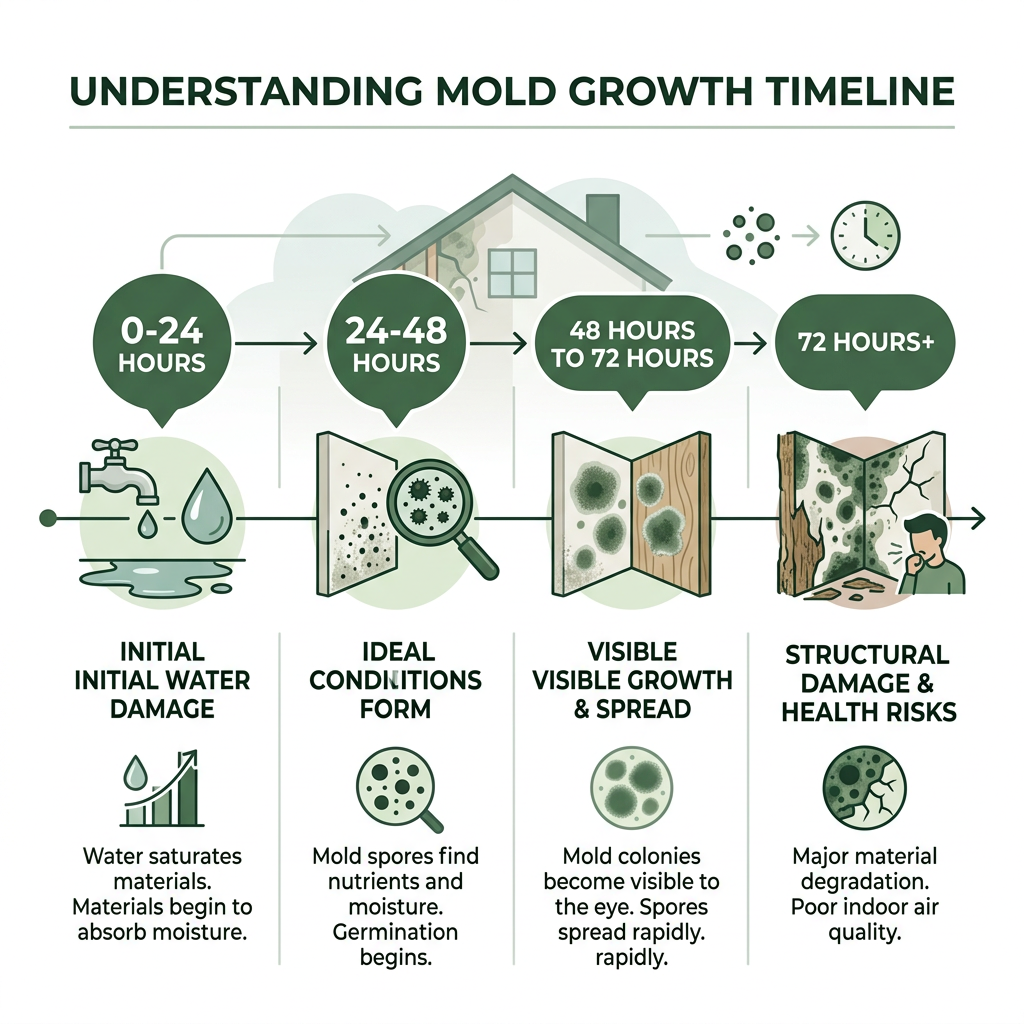
Beyond mold, prolonged moisture exposure leads to severe structural damage. Building materials like drywall, wood, and insulation absorb water, weakening their integrity. Porous materials can reach full saturation within 48-72 hours, leading to warping, swelling, and eventual rot. This not only jeopardizes the safety of the structure but also dramatically increases the scope and cost of repairs. The cost of water damage restoration can increase by 50% or more if not addressed within 48 hours, turning a manageable problem into a major financial burden.
Furthermore, standing water and damp environments create breeding grounds for bacteria and other pathogens, especially if the water source is contaminated. This poses immediate health risks to anyone in the vicinity. Rapid intervention by property restoration services is essential to extract water, dry affected areas, and sanitize surfaces before these secondary damages take hold. Our prompt response helps prevent these escalating issues, minimizing health hazards and protecting your investment.
Decoding Water Categories and Damage Classes
A fundamental aspect of any effective water damage assessment is understanding the nature of the water itself and the extent of its impact. The Institute of Inspection, Cleaning and Restoration Certification, a leading authority in the restoration industry, has established universal standards for categorizing water damage based on contamination levels and classifying it based on the physical impact on materials. These distinctions guide professionals in determining the appropriate safety measures, restoration techniques, and necessary equipment.
Categorizing the Contamination Level
Water damage is classified into three categories based on its contamination level, each dictating a different approach to safety and remediation.
Category 1: Clean Water comes from a hygienic source, such as a burst supply line, overflowing sink, or rainwater. While it’s initially clean, it can quickly degrade into Category 2 or 3 if left untreated, absorbing contaminants from building materials. For instance, what to do when your pipes burst often involves dealing with Category 1 water, but prompt action is key.
Category 2: Gray Water contains a significant level of chemical, biological, or physical contaminants. Sources include washing machine overflows, dishwasher leaks, or toilet overflows containing only urine. This water can cause discomfort or illness if ingested or if exposure occurs. Restoration for gray water requires more than just drying; it involves antimicrobial treatment and often the removal of affected porous materials.
Category 3: Black Water is grossly contaminated and highly unsanitary, posing severe health risks. This includes Sewage Damage Restoration, floodwaters from rivers or oceans, or any water that has passed through contaminated soil. Black water contains pathogenic agents, toxins, and other harmful substances. Handling Category 3 water mandates strict safety protocols, including specialized personal protective equipment (PPE) and often requires HAZWOPER-certified technicians due to the hazardous nature of the materials. The IICRC provides comprehensive guidelines for handling all water categories, emphasizing safety and effective remediation.
Classifying the Physical Impact
In addition to contamination categories, water damage is also classified by its physical impact on materials, particularly the rate of evaporation and the amount of moisture absorbed. These classes help determine the drying strategy and equipment needed.
Identifying both the water category and damage class is critical for developing an effective and safe restoration plan. It ensures that the right tools and techniques are employed, from simple Carpet Drying to complex structural drying and decontamination.
Essential Tools and Technologies for Modern Mitigation
Effective water damage assessment and mitigation rely heavily on specialized tools and advanced technologies. These instruments allow professionals to accurately detect moisture, monitor drying progress, and ensure thorough restoration, even in areas that are not visibly damaged.

The integration of these tools allows for a precise, efficient, and comprehensive approach to water damage assessment and restoration, ensuring that all affected areas are identified and properly treated.
The Step-by-Step Assessment Workflow
A systematic approach to water damage assessment is paramount for ensuring thoroughness, safety, and an effective restoration plan. Professionals follow a detailed workflow, often guided by IICRC standards, to address every aspect of the damage.
This systematic workflow ensures that every water damage scenario, from a minor leak to a major flood, is addressed comprehensively, safely, and effectively, paving the way for a successful Water Damage Restoration in Houston and Dallas.
Frequently Asked Questions about Property Restoration
Navigating water damage can bring up many questions. Here, we address some of the most common inquiries property owners have about the restoration process.
How long does it take for mold to grow after water damage?
Mold typically begins to germinate within 24 to 48 hours in damp, organic environments. If the humidity stays above 60%, the risk of a widespread colony increases significantly, which is why drying the air is just as important as mopping the floor. This rapid onset underscores the critical need for immediate water extraction and drying to prevent mold proliferation. Once mold starts to grow, it quickly becomes a health concern and can necessitate extensive mold remediation efforts, adding complexity and cost to the restoration.
Can I handle a water damage assessment myself?
While you can spot obvious puddles and visible damage, a comprehensive water damage assessment often requires professional expertise and specialized tools. Hidden moisture behind baseboards, under subfloors, or within wall cavities can go undetected by the untrained eye. Missing even a small pocket of “bound water” can lead to structural rot, persistent musty odors, and the insidious growth of mold months down the line. Professionals use advanced equipment like thermal imaging cameras, hygrometers, and precise moisture meters to accurately map the extent of saturation, ensuring no hidden damage is overlooked. Attempting a DIY assessment might save a small amount upfront, but it risks far greater long-term problems and expenses.
Does insurance always cover property restoration?
Most standard homeowners’ insurance policies cover “sudden and accidental” water damage, such as a burst pipe, an overflowing washing machine, or a sudden roof leak. However, policies typically exclude damage from gradual leaks (e.g., a slow, undetected pipe drip over months), neglect, or external flooding (e.g., river overflow, storm surge). For flood damage, a separate flood insurance policy, often through the National Flood Insurance Program (NFIP), is usually required. It’s crucial to review your specific policy details and contact your insurance provider promptly after any water event to understand your coverage. A detailed water damage assessment report, complete with documentation and moisture readings, is vital for substantiating your claim and navigating the Insurance process effectively.
Conclusion
The journey from unexpected water intrusion to a fully restored property can seem daunting, but with a rapid response and professional expertise, it’s a manageable process. Water damage assessment is more than just an initial inspection; it’s a critical, multi-faceted investigation that lays the groundwork for effective mitigation and lasting restoration. By understanding the nuances of water categories, damage classes, and the advanced tools employed by specialists, property owners can make informed decisions that protect their investment and ensure the health and safety of their environment.
We believe that peace of mind comes from knowing your property is in capable hands. Our commitment to thorough assessments, swift action, and adherence to industry best practices ensures that your restoration journey is as smooth and successful as possible. Don’t let water damage linger; proactive intervention is the key to minimizing costs, preventing secondary damage, and restoring your property’s long-term value. For immediate assistance and comprehensive water damage solutions, we’re here to help.
Contact us for expert water damage restoration services today!