

Key Takeaways
- 401(k) plans improve employee retention, financial wellness, and job satisfaction meaningfully.
- The SECURE 2.0 Act provides several financial incentives for small businesses to initiate retirement plans.
- Safe Harbor 401(k) plans help simplify compliance and offer clear benefits to employers and employees.
Supporting employee financial wellness is more than a trend—it’s a responsibility and a strategic advantage for small business owners. By offering robust benefits like 401(k) retirement plans, businesses not only secure their employees’ futures but also elevate their workplace as an attractive destination for top talent. Many business leaders are discovering the advantages of a small company 401(k), seeing both immediate and long-term value for employees and employers alike.
Providing access to retirement savings vehicles paves the way for financial security and fosters a workplace culture built on trust and mutual prosperity. Modern employees increasingly prioritize benefits that support their long-term goals, making retirement plans not just a perk but a necessity. This commitment can set your business apart in today’s competitive hiring market.
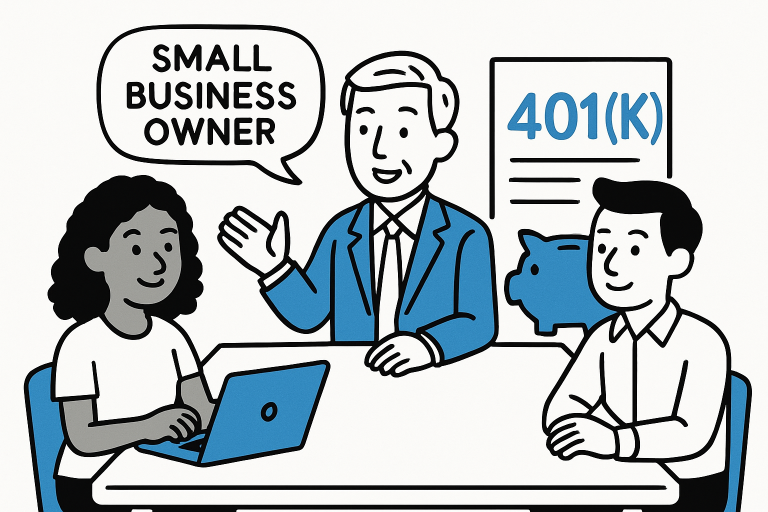
Beyond retention and recruitment, ensuring employees feel financially secure can reduce workplace stress and boost productivity. Workers less worried about their financial future can focus on meaningful contributions to their business, nurturing a cycle of positive morale and sustained performance.
Compelling legislative incentives, greater plan design flexibility, and valuable tax benefits make it easier than ever for small businesses to start offering 401(k)s. Business owners can lay the foundation for enduring employee engagement and growth by understanding plan options and leveraging new laws.
The Importance of 401(k) Plans for Employee Financial Wellness
Retirement readiness is a top concern of the modern workforce, and 401(k) plans are a foundational building block for long-term employee financial wellness. By offering this benefit, employers demonstrate commitment to the holistic well-being of their staff. According to the Society for Human Resource Management (SHRM), employer-sponsored retirement plans are among the most valued workplace benefits, closely linked to increased organizational loyalty and reduced turnover.
Establishing a retirement savings culture can help small companies close the gap for employees who might otherwise struggle to save adequately. The impact extends beyond the workplace, helping team members plan for a confident and comfortable retirement.
Legislative Incentives for Small Businesses
Federal policies such as the SECURE 2.0 Act have removed many historical barriers to offering retirement plans. This legislation introduced significant new incentives: expanded tax credits, reduced administrative workloads through Multiple Employer Plans (MEPs), and encouragement for automatic enrollment features to boost employee participation. Tax credits can cover up to $5,000 of plan start-up costs annually for the first three years, easing the financial commitment to launching a new plan.
Additional benefits include further credits for employer contributions and streamlined plan designs that reduce compliance complexity for business owners, making these benefits more accessible and less daunting to implement.
Understanding Safe Harbor 401(k) Plans
Safe Harbor 401(k) plans simplify regulatory compliance, an appealing feature for business owners concerned about IRS testing and potential penalties. Everyone benefits from mandatory employer contributions—either through matching employee deferrals or providing non-elective amounts—and employees receive immediate vesting. Employers, meanwhile, are exempt from annual nondiscrimination testing, saving effort and resources.
This plan type helps ensure highly compensated employees can fully participate without limitation, while all workers enjoy the security of employer-provided contributions. As such, it’s a popular choice for new and established businesses wanting straightforward, inclusive retirement benefits.
Cost Considerations and Tax Benefits
Costs remain a frequent concern, but today’s environment is much more favorable to small businesses starting 401(k) plans. Beyond the SECURE 2.0 Act tax credits, business owners benefit from the deductibility of employer contributions, which can improve their tax position. Investment in a retirement plan should be seen as a value driver—helping attract top talent, lower turnover, and increase employee engagement, all of which carry significant financial upside.
The IRS maintains current information on tax deductions and credits available for employer-sponsored plans. Taking advantage of these incentives can make offering a 401(k) an attainable step even for smaller employers. For more information on potential tax savings, consult the IRS retirement plans startup cost tax credit resource.
Steps to Implement a 401(k) Plan
- Assess Business Needs: Survey the needs and preferences of your team, and identify the business objectives you hope to achieve with a retirement plan.
- Choose a Plan Type: Determine which plan—traditional, Safe Harbor, or another variation—best aligns with your company and employee needs.
- Select a Provider: Research and enlist a reputable plan administrator who can deliver compliance expertise and ongoing support.
- Develop a Plan Document: Create and formalize plan rules, including eligibility, vesting schedules, contribution types, and withdrawal options.
- Communicate with Employees: Share the benefits, enrollment procedures, and long-term value of the plan, ensuring all team members understand their options.
- Monitor and Adjust: Regularly evaluate plan performance and adjust features such as employer match rates or investment menu, as necessary.
Educating Employees on Retirement Planning
Even the best retirement plans require engaged and informed participants. Hosting educational sessions, inviting financial wellness experts, and providing access to resources and digital tools will empower employees to make wise decisions about saving for retirement. Increasing plan literacy improves participation rates and underscores your business’s commitment to its people.
Recent research from NYSSCPA reveals that nearly 90% of U.S. workers consider a 401(k) crucial for retirement readiness. This highlights the importance of clear communication and ongoing education about how to fully leverage plan opportunities.
Monitoring and Adjusting the Plan
Ongoing review is essential to ensure your plan continues to meet the evolving needs of your workforce. Regularly soliciting employee feedback, staying abreast of legislative updates, and benchmarking against industry norms will help you fine-tune offerings, keep participation competitive, and maximize the plan’s positive impact.
Consider periodic plan audits and work with your provider to identify improvements and additional features that could enhance your offering over time.
Conclusion
With the expanded support from legislation, simplified compliant plan designs, and robust educational tools, now is one of the most advantageous times for small business owners to adopt a 401(k) retirement plan. Empowering employees with long-term financial security elevates their well-being and strengthens your organization’s culture, retention, and growth potential. Leveraging legislative incentives and proactive plan management, small business owners can position their companies—and their teams—on a path to success for years.