

Key Takeaways
- Insurance coverage has a direct impact on patient safety by determining access, timing, and quality of healthcare services.
- Barriers such as prior authorization delays, restrictive networks, and coverage denials often lead to worsening health outcomes and preventable complications.
- Financial constraints, including high deductibles and copayments, discourage preventive care and medication adherence, thereby increasing patient risk.
- Cybersecurity protection in healthcare insurance is vital, as digital threats can compromise both patient privacy and safety.
- Choosing comprehensive and reliable liability insurance for healthcare professionals helps ensure both patient protection and operational safety in the delivery of care.
Introduction
Ensuring patient safety is a cornerstone of quality healthcare, but its deep interdependence with insurance coverage is sometimes underestimated. The intricacies of how insurance policies affect access to timely treatments, quality of care, and health outcomes are vast, shaping every stage of the patient journey. From delays in authorization to network restrictions, the structure and scope of insurance coverage can either facilitate or hinder the safety and well-being of patients. Choosing the best liability insurance for doctors and nurses is more than a financial decision—it’s crucial for maintaining safety standards in healthcare institutions and minimizing risks to both patients and providers.
Recognizing these dynamics is crucial for healthcare stakeholders, policymakers, and the insured themselves. Every year, new insurance policies and regulations are introduced, shaping how providers and facilities deliver care and how patients experience it. Insurance not only determines the kind of care a patient can access but also affects the continuity and overall safety of that care. The choices that plans make about what is covered, under what circumstances, or within which networks, are not abstract—they have very real consequences for clinical outcomes and the quality of life of the people covered. Therefore, a closer examination of how insurance coverage frameworks impact patient outcomes is necessary to improve healthcare quality across the board.
Insurance Policies and Access to Care
Insurance policies powerfully shape patient access to health services, forming the backbone of how, where, and when patients can seek and receive medical treatment. According to the American Hospital Association, 62% of patients report delays in receiving care due to insurance-related obstacles, with nearly half acknowledging that these delays result in a worsening of their health. These obstacles range from prior authorization requirements to coverage denials, often forcing individuals to postpone or forego needed treatments. For families navigating complex or chronic illnesses, these delays can lead to repeated visits, rushed alternative care, and unnecessary emergency room utilization—all of which directly impact patient safety.
Health coverage plans typically define eligible services and procedures, as well as the steps patients and providers must go through to secure approval. This process is not just administrative—it often determines whether a patient receives a timely diagnosis, receives the necessary medication, or undergoes preventive screening that could prevent future complications. When policies are too restrictive or inflexible, the risk to patient safety grows—unmanaged conditions can worsen, preventable complications may arise, and hospitalizations can increase as a result. This scenario is especially frequent among those facing chronic illnesses or requiring specialized interventions, where delayed or denied care can lead to severe outcomes, lengthy recovery periods, or even permanent damage.
Prior Authorization: A Double-Edged Sword
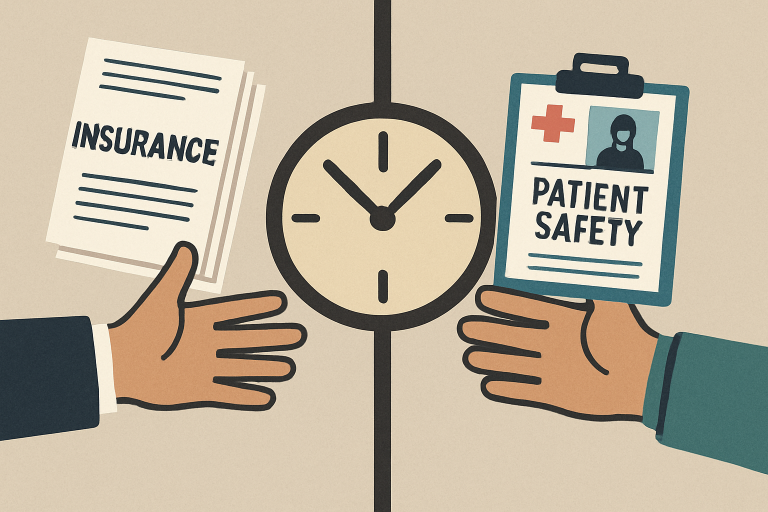
While prior authorization processes are designed to control unnecessary spending and ensure clinical efficacy, they often introduce time-sensitive barriers that compromise patient safety. Hospitals and clinics routinely encounter cases where critical treatments are delayed while awaiting insurance approval, leading to exacerbations of illness and, in some instances, irreversible harm. For instance, a patient with severe pain or progressive disease might wait days or weeks before receiving a medication, all due to paperwork and administrative review. The American Hospital Association has highlighted numerous reports in which prior authorization delays compromise care outcomes, as patients may wait for essential medications, diagnostic procedures, or life-improving surgeries, only to have their health deteriorate in the interim.
Prior authorization requirements also add significant stress for healthcare providers, who dedicate considerable time and resources to secure approvals. These extra steps not only detract from time spent on direct patient care but also create frustration and burnout among healthcare staff, compounding safety risks through rushed or fragmented communication. When the process is opaque or paperwork-intensive, the administrative burden can become a barrier in itself. Patients may abandon their pursuit of care, especially if they’re vulnerable or face language or health literacy challenges, simply because the insurance gatekeeping process is overwhelming.
Network Limitations and Patient Choice
Another critical aspect of insurance is the limitation imposed by network design. Insurance networks designate which healthcare providers or hospitals patients are permitted to visit at an in-network rate, and venturing outside this network frequently results in prohibitively high out-of-pocket costs. These limitations are particularly concerning for individuals who require specialized care or reside in areas with limited hospital options. For individuals living in rural areas, where healthcare options are already limited, network limitations can force choices between prohibitively expensive care and care that may be less than optimal, both of which pose risks to patient safety.
In specialized cases—such as those involving rare diseases or complex surgeries—limited provider networks can create additional safety risks by preventing timely access to specialists with critical expertise. Patients may have to travel long distances or experience delays while trying to secure appointments with approved providers, all the while their conditions may worsen. The inability to choose experienced providers or access the institution with the best-suited resources can turn manageable health conditions into emergencies. In effect, insurance network rules sometimes leave patients with little recourse but to accept suboptimal care or face significant ‘surprise’ medical bills if they seek expert treatment elsewhere.
Denial of Medically Necessary Care
Insurance denials can have immediate and severe repercussions for patient safety. When coverage for medically justified treatments is refused, patients are left with unmet health needs that can escalate into more complex conditions. Providers are often left advocating on behalf of their patients through lengthy appeals processes, while patients wait in uncertainty. The American Hospital Association reports that these denials not only delay recovery but can also lead to a cascade of complications and rising healthcare costs, most commonly due to avoidable emergency room visits or hospital admissions. Denials are particularly prevalent for new or emerging therapies, high-cost specialty medications, and advanced diagnostic testing that might be critical to timely care.
In some cases, the cumulative impact of repeated insurance denials is so discouraging that patients give up on seeking treatment, significantly raising their risk for preventable harm or further deterioration. This is especially true for vulnerable populations, including children, the elderly, and those with complex chronic conditions who rely on consistent and reliable access to medical interventions. With no clear or standardized pathway for reconsideration, many individuals feel powerless in the face of bureaucracy, undermining trust in the healthcare system itself.
Financial Barriers and Health Outcomes
Both high deductibles and substantial co-payments represent formidable obstacles to accessing care for many Americans, particularly for lower-income populations. Even those with “good” insurance often confront staggering bills for hospital stays, medicines, or specialist visits. Studies published in the National Institutes of Health (NIH) journals show a clear correlation between reduced insurance coverage, higher out-of-pocket expenses, and adverse health outcomes. For example, Medicaid recipients and uninsured patients are statistically more likely to experience safety events—such as hospital-acquired infections—compared to those with robust private insurance.
Financial barriers thus not only limit access to preventive and regular care but also expose individuals to a higher risk of complications from untreated or undertreated conditions. Patients may avoid filling necessary prescriptions or skip follow-up visits altogether due to fear of costs, putting them at risk of acute crises that require emergency intervention. For families facing chronic illnesses or recurrent health problems, these costs multiply, often causing individuals to ration care or decide between healthcare and other necessities like food, housing, or utilities. The result is a cycle where poorer health drives increased costs and gaps in preventive care compound the risk of adverse events, harming overall patient safety at a systemic level.
Cybersecurity Threats and Insurance Coverage
In today’s digital healthcare environment, cybersecurity has emerged as a significant yet unexpected threat to patient safety. Data breaches, ransomware attacks, and system outages can lead to disruptions of clinical services, unauthorized release of medical information, and even medical errors when systems are compromised. Hospitals and clinics store a vast amount of sensitive data that, if accessed or tampered with, could compromise not only individual privacy but also the ability to deliver timely and accurate care.
The U.S. Food and Drug Administration (FDA) has identified cybersecurity risks in certain patient monitors, warning that these devices could be accessed and manipulated by unauthorized individuals, potentially leading to remote control of the monitors, malfunctioning, network compromise, unauthorized data access, and data exportation of personally identifiable and protected health information. The FDA urges healthcare facilities to take steps to mitigate these risks but confirms that there have been no reported cybersecurity incidents, injuries, or fatalities related to the identified vulnerabilities. As more medical devices and healthcare systems become digitally connected, insurance coverage for data protection and liability is increasingly crucial for both patient safety and organizational resiliency against cyber threats.
Final Thoughts
The bond between insurance coverage and patient safety is deeply interwoven. Insurance policies govern not just the cost of care, but also its immediacy, appropriateness, and continuity. Complicated approval processes, restricted access to providers, denials of necessary treatments, financial obstacles, and digital threats all contribute to shaping healthcare experiences and outcomes. Addressing these complex challenges will require thoughtful insurance reforms, greater transparency, and stronger collaboration between insurers, providers, and patients. Improving this relationship—through clearer communication, policy updates, and a focus on patient-centered care—remains essential for the well-being and safety of every patient.