

It’s not about the gadgets you see. It’s about the friction you don’t feel.
For most of us, the definition of a welcoming home is grounded in simplicity. It is the soft, amber glow of a lamp in the evening; a room that has shaken off the winter chill before you step out of bed; the quiet, reassuring sense that everything is in its place. We often think of “smart homes” as complex webs of screens and sensors, but the true purpose of technology is actually the opposite. It is not there to be managed. It is there to manage the details so you don’t have to.
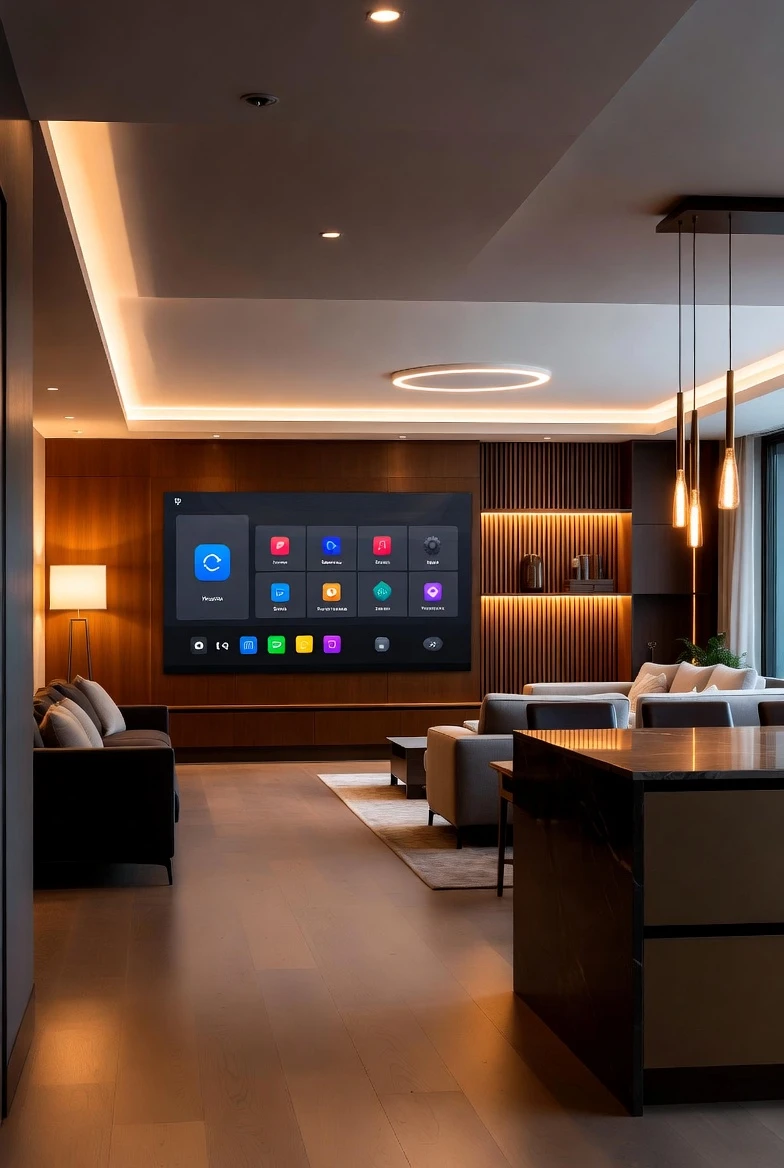
When a house truly knows your rhythm, the friction of daily life begins to dissolve. You spend less time hunting for switches, adjusting thermostats, or wondering if you locked the front door. The space simply adapts. The mechanics of running the home recede into the background, allowing you to focus on the people and moments inside it.
This shift is most palpable in how a home handles the atmosphere. Consider the climate: in a traditional setup, comfort is a fixed number on a wall that you must constantly chase. An intelligent system changes this dynamic entirely. It learns when the house wakes up and when it sleeps. It gently warms the floors before your alarm goes off and conserves energy when the rooms are empty. It follows your day, rather than forcing you to interrupt yours to adjust it.
Lighting, too, moves beyond mere function to become a tool for mood. Harsh overhead lights can make even a cozy living room feel flat and tired. Conversely, layered lighting—the interplay of sconces, lamps, and dimmers—can make a cavernous space feel intimate. In a smart home, you capture these perfect combinations as “scenes.” With a single touch or a soft voice command, a bright “Work” mode transitions instantly to a “Dinner with Friends” setting. Hallways and porches respond to movement, guiding you with light when you need it and fading into darkness when you don’t.
Perhaps the greatest luxury, however, is the removal of the mental burden. As highlighted in recent reports on the Invisible Load of household management, the constant thinking about small tasks is often more exhausting than the tasks themselves. Smart home routines compress this list into a single, effortless action. A “Goodnight” routine does it all at once: darkening the downstairs, leaving a reassuring glow in the hallway, locking the doors, and lowering the temperature for sleep. It offers the profound comfort of safety and control, without the mental clutter.
Crucially, this layer of intelligence is designed to be invisible. There is a common fear that adding technology will turn a warm, personal sanctuary into a cold gadget showroom, but modern design has solved this. The best devices disappear: bulky banks of switches are replaced by elegant, discreet keypads; sensors are tucked into ceilings; smart bulbs fit into your existing lamps.
This allows your style to remain the star. Whether your aesthetic is rustic farmhouse, timeless traditional, or sleek minimalism, the “smart” elements live behind the scenes. The home still looks exactly like your home. It just behaves with a newfound intuition, leaving you with the comfort you’ve always wanted. This philosophy of invisible technology is at the core of what we do at Nestology.pro, where the goal is to enhance the homeowner’s experience without overshadowing the home’s design.