

Getting Started: From Digital Concept to Print-Ready File
The world of textiles offers immense creative power. Imagine seeing your unique vision come alive, not just as a drawing, but as actual fabric. This is the core of custom fabric printing. It enables creators to transform their ideas into one-of-a-kind textiles.

This cutting-edge solution benefits many people. Fashion designers find it invaluable. Home decor enthusiasts use it for personalized touches. DIYers can bring their specific projects to life. Small businesses also use it for special branding or unique product lines. Personalized fabric offers great freedom and sets creations apart.
This detailed guide will cover all parts of creating custom fabric. Readers will learn the entire process, from a digital idea to the finished product. This includes identifying essential file requirements and selecting the most suitable fabric type. It also covers different printing methods and how to arrange designs. Understanding how to design custom fabric for unique projects is now easier than ever. This guide aims to make the process clear, so anyone can confidently make their perfect textile.

The journey of custom fabric printing begins long before ink touches material. It starts with a digital concept, changing an idea into a print-ready file. This initial phase is critical, as the quality and accuracy of the final fabric print depend heavily on meticulous preparation. For those new to the process, it might seem daunting, but breaking it down into manageable steps makes it accessible.

Key Steps in the Design Process
Every custom fabric project starts with an idea, which then undergoes a structured design process:
- Brainstorming and Ideation: This is where the core concept takes shape. What is the purpose of the fabric? What aesthetic is desired? This stage involves sketching, mood boarding, and exploring themes.
- Digital Creation: Once the concept is clear, it’s translated into a digital format. Designers use various software programs to create their patterns. This could involve drawing, painting, photo manipulation, or generating intricate geometric designs.
- Vector vs. Raster: Understanding the difference between vector and raster graphics is crucial.
- Raster images (like JPGs or PNGs) are made of pixels. They are ideal for photographs and complex artwork with subtle color gradients. However, they can lose quality and become pixelated when scaled up significantly.
- Vector images (like SVGs or AI files) are made of mathematical paths. They are perfect for logos, illustrations, and patterns that need to be scaled to any size without losing resolution or quality. For seamless repeats, vector graphics often offer more flexibility.
- Final Product Use-Case Consideration: The intended use of the fabric should guide the design. A pattern for upholstery might need to be more durable and less intricate than one for a delicate scarf. The scale of the design, its color palette, and its overall complexity should align with the end product.
Essential File Specifications to Design Custom Fabric
To ensure a high-quality print that accurately reflects the digital design, adherence to specific file requirements is paramount. These specifications are standard across the industry to facilitate optimal printing results.
- Resolution (DPI): Resolution refers to the density of pixels in an image, measured in dots per inch (DPI). For fabric printing, a higher DPI generally means a sharper, more detailed print. While a minimum resolution of 150 dpi is often acceptable for basic prints, a resolution of 300 dpi is ideal for achieving the best results, ensuring crisp lines and vibrant colors.
- Color Space (RGB): Digital designs are typically created in either RGB (Red, Green, Blue) or CMYK (Cyan, Magenta, Yellow, Black) color spaces. For custom fabric printing, it is highly recommended to use an RGB color space, specifically the sRGB IEC61966-2.1 profile. This profile ensures that the colors you see on your screen are accurately reproduced on the fabric, minimizing unexpected color shifts.
- File Formats: Most custom fabric printers accept a range of common file formats. These typically include JPG, PNG, PDF, TIF, and EPS. While JPG and PNG are widely used for raster images, TIF (Tagged Image File Format) is often preferred for high-quality raster graphics due to its lossless compression. PDF and EPS are versatile formats that can handle both vector and raster elements, making them excellent choices for complex designs.
- File Size Limits: While high resolution is desired, extremely large file sizes can be problematic. Designers should be mindful of any specified file size limits, typically under 10 MB, to ensure smooth uploads and processing.
Overcoming Common Design Problems
Even with precise specifications, designers can encounter challenges. Anticipating and addressing these can save time and ensure satisfaction.
- Creating Seamless Repeats: Many fabric designs feature repeating patterns. Ensuring these patterns tile seamlessly without visible lines or breaks is a common hurdle. Designers often use specialized tools within their software to preview and adjust repeats, such as standard repeat, half-drop, or half-brick options.
- Color Matching (Digital vs. Physical): The colors displayed on a screen can sometimes differ from the printed fabric. Factors such as monitor calibration, fabric type, and printing method all influence the final color. Using the recommended sRGB profile helps, but ordering test swatches (discussed later) is the best way to verify color accuracy.
- Scaling Designs Accurately: The design’s scale must be accurately translated from the digital file to the physical fabric. Designers should work at the intended print size or ensure their resolution is high enough to accommodate scaling without pixelation.
- Verifying Design Ownership: A critical legal and ethical consideration is intellectual property. Designers must ensure they own the rights to the designs they upload or have proper licensing in place. Reputable printing services require confirmation of design ownership to prevent copyright infringement. For general guidance on designing fabric, resources like designyourfabric.com can offer helpful insights.
Choosing Your Canvas: A Guide to Fabric Types and Textures
The fabric you choose is just as important as the design itself. It acts as the canvas, influencing everything from how your design looks to how the final product drapes, feels, and performs. Understanding the characteristics of different fabric types is essential for making an informed decision.
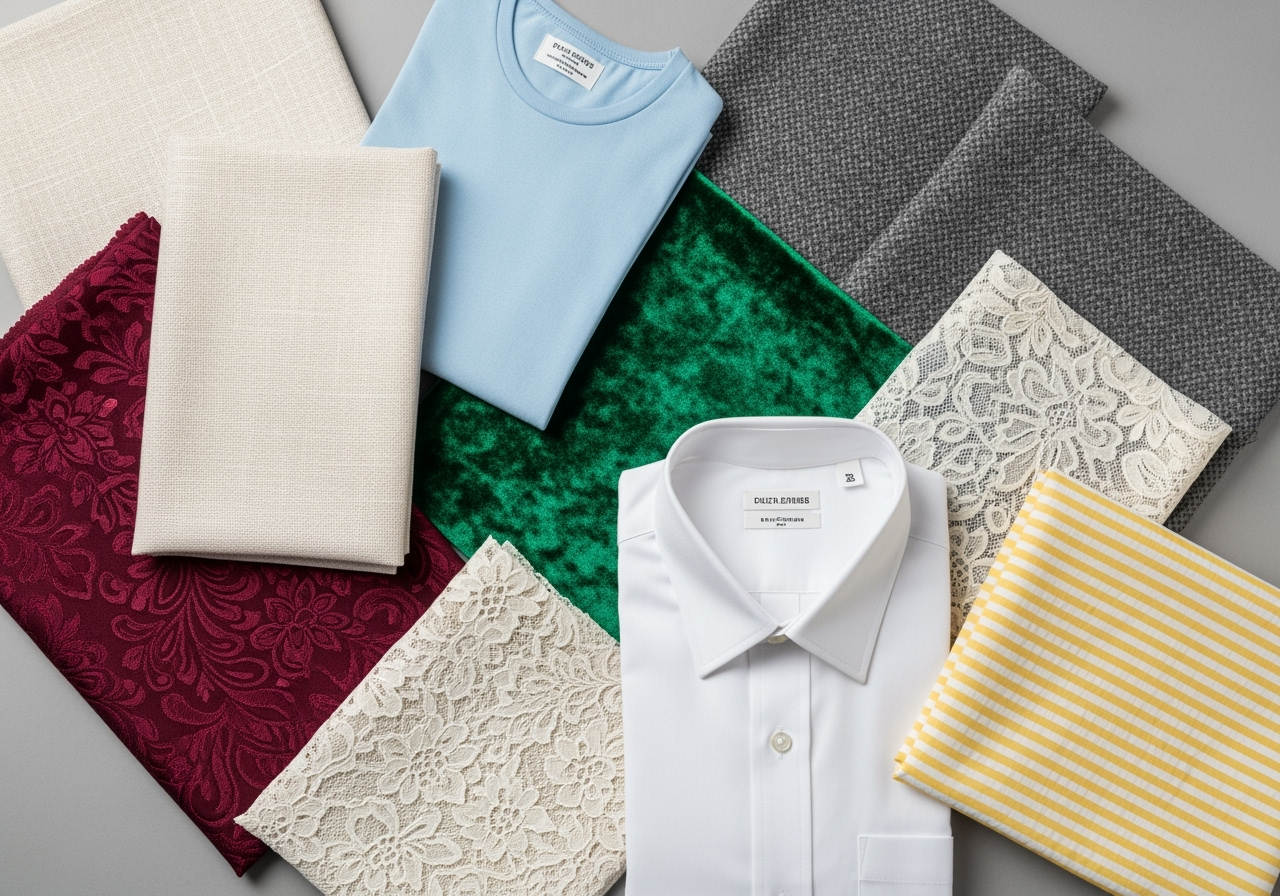
Modern custom fabric printing services boast an impressive array of options. For instance, some providers offer as many as 139 different fabric options, ensuring there’s a perfect match for virtually any project. These options encompass a diverse range of natural and synthetic fibers, each with distinct properties.
Natural Fibers: Cotton, Linen & Silk
Natural fibers are celebrated for their breathability, soft hand, and classic appeal. They are derived from plants or animals and offer distinct qualities.
- Cotton: A versatile and widely used fiber, cotton comes in many forms, including poplin, twill, sateen, and jersey. It’s known for its softness, absorbency, and breathability, making it ideal for apparel, quilting, and home decor items like sheets and pillowcases. For example, fabric for blankets often uses cotton for its comfort.
- Linen: Derived from the flax plant, linen is prized for its strength, durability, and natural luster. It’s highly breathable and absorbent, making it excellent for warm-weather apparel, table linens, and upholstery. Linen has a distinct crispness and develops a beautiful softness with age and use.
- Silk: A luxurious protein fiber produced by silkworms, silk is renowned for its smooth, soft texture, neat drape, and natural sheen. It’s lightweight yet strong and is often used for high-end apparel, scarves, and delicate home furnishings.
Common Natural Fabrics for Printing:
- Cotton Poplin: Crisp, smooth, and lightweight, great for shirts, dresses, and quilting.
- Cotton Twill: Durable with a diagonal weave, suitable for pants, jackets, and bags.
- Organic Cotton Sateen: Soft, smooth, with a subtle sheen, good for apparel and bedding.
- Linen Cotton Blend: Combines the strength of linen with the softness of cotton, making it versatile for a wide range of uses.
- Quilt Cotton: Typically a medium-weight cotton, perfect for quilting projects.
Synthetic & Blended Fibers: Polyester, Spandex & Velvet
Synthetic fibers are engineered to exhibit specific performance characteristics, often offering enhanced durability, vibrant color, and stretch. Blends combine the best of both worlds.
- Polyester: A highly durable and wrinkle-resistant synthetic fiber, polyester excels at retaining vibrant colors and resisting fading. It’s often used for activewear, outdoor fabrics, and items requiring longevity. Polyester can be found in various forms, including poplin, canvas, and performance knits.
- Spandex (Lycra): Known for its exceptional elasticity, spandex is often blended with other fibers to add stretch and comfort. It’s crucial for activewear, swimwear, and form-fitting apparel.
- Velvet: While historically made from silk, modern velvets are often made from polyester or blends to achieve a plush, soft pile with excellent durability and rich color saturation, making them ideal for upholstery, drapery, and luxurious apparel.
Common Synthetic & Blended Fabrics for Printing:
- Poly Spandex: Combines the durability of polyester with the stretch of spandex, perfect for activewear and swimwear.
- Double Brush Polyester: Exceptionally soft with a brushed finish on both sides, great for comfortable apparel.
- Canvas Duck: A heavy, plain-woven cotton or polyester fabric, highly durable for bags, outdoor gear, and upholstery.
- Fleece: Soft, warm, and often made from polyester, ideal for blankets, jackets, and loungewear.
- Microsuede: A synthetic fabric designed to mimic suede, offering durability and stain resistance for upholstery and accessories.
- Shiny Charmeuse: A lightweight fabric, often made of polyester, featuring a glossy front and a dull back, used for refined apparel and linings.
How to Select the Right Fabric for Your Project
Choosing the right fabric involves considering several factors:
- Consider the End Use: What will the fabric be used for? Apparel requires different properties (such as drape and breathability) than upholstery (durability and rub count) or outdoor applications (water resistance and UV stability).
- Drape and Structure: How does the fabric fall? Some fabrics (like chiffon or jersey) have a fluid drape, while others (like canvas or twill) are more structured. This affects the garment’s silhouette or the cushion’s shape.
- Durability Requirements: Will the fabric face heavy wear and tear? For items such as bags or furniture, a more robust fabric, like canvas or heavy-duty polyester, is necessary.
- Care Instructions: Different fabrics have different care needs. Some are machine washable, while others require dry cleaning or delicate hand washing.
- Ordering Swatch Packs: The best way to understand a fabric’s true feel, drape, and how colors appear on it is to experience it firsthand. Many custom fabric printers offer swatch packs, allowing customers to feel and compare fabric quality before committing to a larger order. Often, a $10 discount code is provided with the purchase of a swatch pack, which can be applied to a first order. This is a crucial step in ensuring quality and accuracy before ordering in bulk.
The Printing Process: How to Design Custom Fabric
Once your design is perfected and your fabric chosen, the next stage is the actual printing. Modern custom fabric printing primarily relies on advanced digital printing technology, which offers incredible versatility, vibrant colors, and efficient production.
Understanding Modern Printing Methods
Custom fabric printing employs several sophisticated methods, each tailored to different fabric types and desired outcomes. The choice of method impacts color vibrancy, durability, and the final feel of the fabric.
| Printing Method | Description | Advantages